
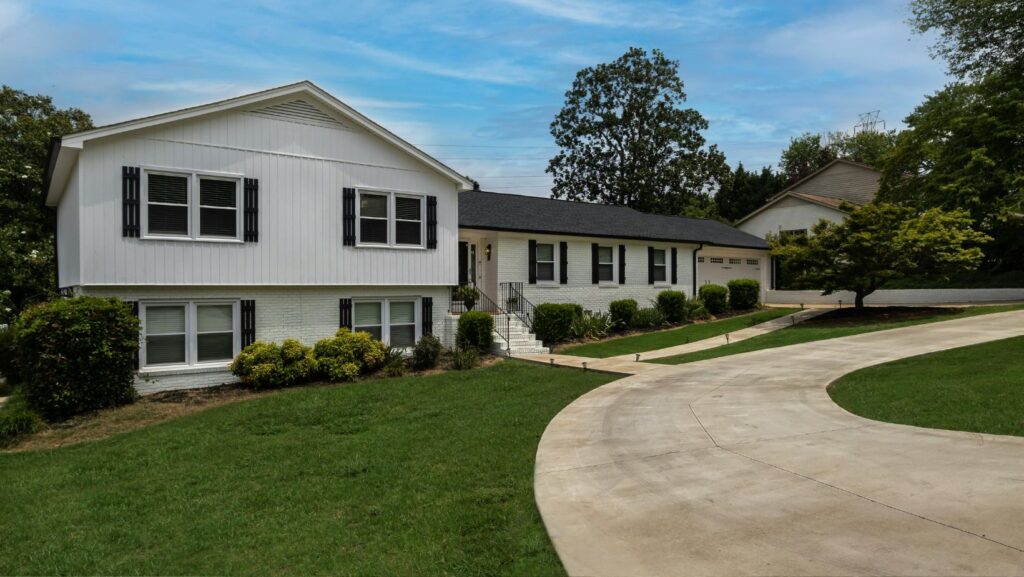
A driveway is the first thing guests and potential home buyers see, so its condition significantly impacts the overall impression of a property. It is no secret that over time, even the highest quality concrete fades, becomes covered in cracks, and gets stained with oil. Such a condition of the surface often leads owners to consider a complete demolition and the pouring of a new pavement. However, there is a much more economical and faster alternative—driveway resurfacing, which allows you to turn old concrete into new without the need to spend huge amounts of money on heavy machinery and construction waste removal.
What is resurfacing, and why is it beneficial?
Resurfacing is a technology for applying a special polymer-cement layer onto an existing concrete base, allowing you to hide defects and strengthen the surface. Here is why this decision is economically beneficial:
- Budget Savings. The cost of materials and labor for restoration is significantly lower than the expenses for a complete demolition of old concrete and pouring a new monolith.
- Speed of Execution. The process usually takes a few days, whereas a full driveway replacement can stretch for weeks due to the time required for new concrete to cure.
- Eco-friendliness. The lack of need to break up and haul tons of old concrete to a landfill reduces the carbon footprint and the impact on the environment.
The main advantage of this method is that you pay only for what you see—a new, durable surface—while keeping the old concrete as a reliable foundation. Polymer additives in the mixture provide a strong bond with the old base, creating a monolithic structure resistant to vehicle loads. This is a smart investment that provides a “new driveway” effect for a fraction of the cost of major construction. In this simple way, you preserve the family budget for other needs.
Main stages of the restoration technological process
For the new coating to serve for years rather than peel off after the first winter, it is critically important to follow the correct surface preparation technology. Specialists identify the following key stages:
- Deep Cleaning. Removal of dirt, oils, moss, and old sealant using a high-pressure washer (sometimes up to 3500-4000 PSI) to open the pores of the concrete.
- Crack and Chip Repair. Filling all potholes and active cracks with special repair compounds or epoxy resins to prevent them from “telegraphing” through the new layer.
- Application and Finishing. Even distribution of the resurfacing mixture and providing it with the desired texture (smooth, broom-finished, or stamped).
The success of resurfacing depends 80% on the preparation stage: if the mixture is applied to dirty or crumbly concrete, adhesion will be weak, and the coating will quickly fail. Professional crack filling is mandatory because, while the polymer layer is strong, it cannot compensate for the shifting of broken base slabs. The final application requires skill to ensure proper slope for water drainage and to avoid the formation of puddles on the surface.
Design features and protection of the new coating
In addition to restoring integrity, resurfacing opens up wide opportunities for the decorative design of the property. Customers of such a coating receive the following advantages:
- Variety of Textures. The ability to imitate natural stone, brick, pavers, or create a slip-resistant surface for winter safety.
- Color Solutions. Adding pigments allows you to match the driveway color to the house facade, moving away from the dull gray of standard concrete.
- Protective Sealing. Final coating with a special sealer that protects the road from UV rays, moisture, salt, and chemical agents.
Using decorative stamps and stencils simplifies driveway maintenance and keeps it attractive throughout many years of operation.
When you need more than just resurfacing
If the concrete slab “heaves” due to soil subsidence, has through-cracks that are constantly expanding, or has turned into gravel, unfortunately, the only correct solution in such a case would be complete demolition and addressing the underlying issues (soil). Otherwise, the new coating will crack in the same places as the old one.
Updating a driveway using the resurfacing method is the optimal balance between price, quality, and aesthetics for concrete surfaces that have maintained their integrity. This technological solution allows for extending the life of the driveway by 10–15 years, protecting it from aggressive weather influences, and refreshing the appearance of the site.