
For homeowners in Austin and the Dallas-Fort Worth area who are considering concrete resurfacing for a driveway, patio, or pool deck, the decision comes with a legitimate question: how long will it actually last?
Concrete resurfacing has a mixed reputation among homeowners precisely because not all resurfacing work is equal. A properly executed project using the right materials and preparation can look excellent and perform reliably for a decade or more. A poorly executed one begins to show failure within a year or two. Understanding what separates the two is the most useful thing a homeowner can know before evaluating contractors or accepting a quote.
Engaging experienced concrete resurfacing contractors who use proven materials and invest in proper preparation is the single biggest factor in getting a result that holds up under Texas conditions.
Why Some Resurfacing Fails Early
The most common cause of premature resurfacing failure is inadequate surface preparation. For an overlay to bond properly, the existing concrete surface needs to be clean, structurally sound, and properly profiled, meaning slightly abraded to create mechanical adhesion for the new material.
If the surface preparation is rushed or incomplete, the overlay may adhere superficially but fail to create a strong enough bond to withstand thermal cycling, foot traffic, and vehicle loads. Delamination, where the overlay layer separates from the substrate beneath it, is the visible symptom of poor preparation. It appears as bubbling, peeling, or sections of overlay that flex or lift from the surface.
Equally important is choosing overlay materials appropriate for the application. An overlay designed for interior floors may not be formulated to withstand UV exposure, temperature extremes, or freeze-thaw cycling in exterior applications. Texas’s climate presents specific challenges, including intense UV radiation in summer and the occasional freeze event in winter, and the materials used need to be specified for those conditions.
What Proper Resurfacing Preparation Looks Like
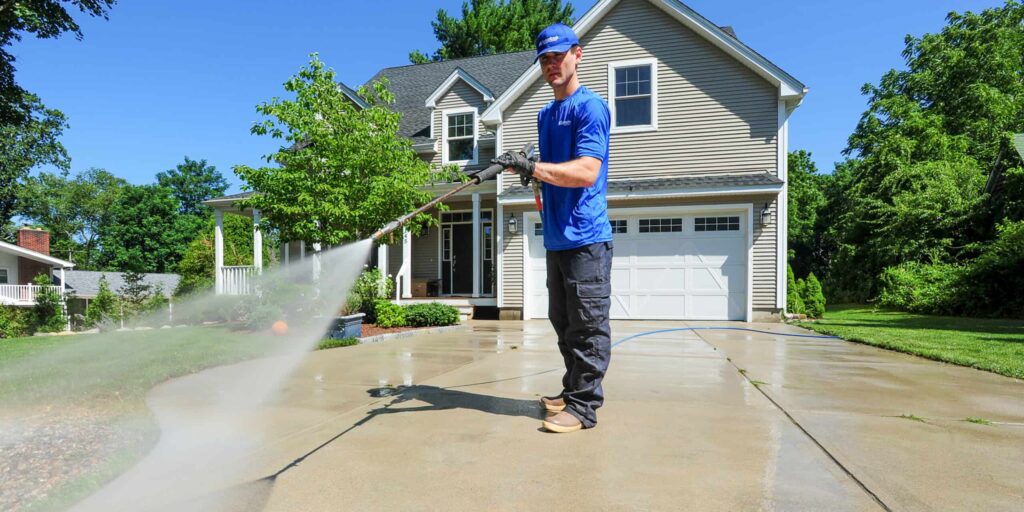
A professional resurfacing preparation process begins with pressure washing and degreasing the existing surface to remove dirt, oils, and any loose material. Concrete that has oil contamination from a driveway application may need additional treatment to ensure the contaminating substance is fully removed from the surface pores.
Any cracks in the existing concrete are addressed before the overlay is applied. Depending on the width and depth of the cracks, this may involve flexible crack filler to allow minor ongoing movement, or epoxy injection for more significant structural cracks. The goal is to create a stable, uniform base that won’t immediately telegraph any pre-existing issues through the new overlay layer.
Surface profiling through grinding or shot blasting creates the mechanical texture needed for strong overlay adhesion. This step is often visible evidence of a contractor’s commitment to doing the job properly. Skipping it produces an overlay that looks fine for months and fails before its time.
The Texas Climate Factor
Texas’s climate creates specific demands for outdoor concrete resurfacing materials. Intense summer UV exposure causes color fading and can degrade sealers that are not rated for high UV environments. The heat cycling between summer highs and winter lows places significant thermal stress on both the overlay and the bond between overlay and substrate.
The Okonkwo clay soils common in the Austin area present additional challenges because soil movement can translate as stress into the concrete slab and, by extension, into the overlay above it. Overlay systems with good flexibility, designed to accommodate minor substrate movement without cracking, perform significantly better in this environment than rigid systems.
The right contractor will understand these site-specific requirements and specify materials accordingly, not simply use whatever overlay product is cheapest or most readily available.
Realistic Longevity Expectations
A well-executed concrete resurfacing project in Texas, using appropriate materials and proper preparation, typically performs well for ten to fifteen years before significant refinishing is needed. Sealer reapplication every two to three years helps maintain the surface’s protective layer and extends this timeline.
High-traffic areas like driveways will see more wear than low-traffic patios, and the specific finish type affects how visible that wear becomes. Textured overlays that mimic stone tend to show wear less obviously than smooth finishes.
Understanding this timeline helps homeowners plan financially. Resurfacing is not a permanent solution in the way that natural stone installation is, but it is a cost-effective, visually dramatic improvement that delivers good value over its service life, particularly when compared to the alternative of full concrete replacement.
Asking the Right Questions Before Hiring
Before committing to a resurfacing contractor, a few questions help identify providers who will deliver lasting results. What surface preparation do you do before applying the overlay? What overlay product are you using, and is it rated for outdoor applications in Texas? What is the sealer, and how long does it last before reapplication? What warranty does the project carry?
These are not adversarial questions. They are the questions that serious, quality-focused contractors expect and welcome. Contractors who become evasive or dismissive when asked about their process are providing important information about what the experience of working with them will be like.