
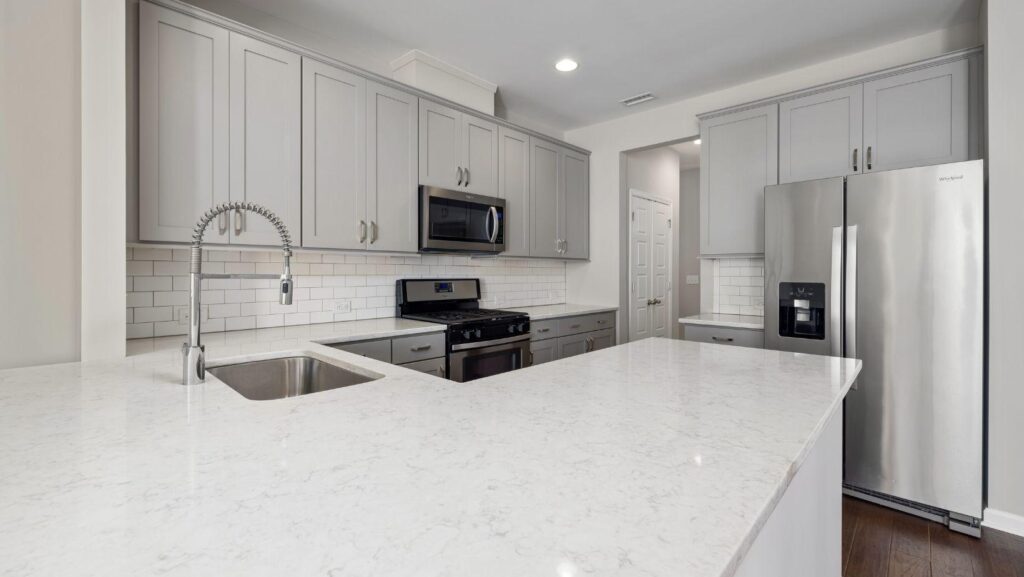
Quartz countertops have become an increasingly popular choice for modern kitchens due to their durability, low maintenance, and wide variety of design options. However, quartz can be a significant investment, especially in large kitchens, so it’s important for homeowners to understand the key factors that affect performance, cost, and long-term satisfaction.
Understanding Quartz Composition
Quartz countertops are engineered from quartz crystals that are mixed with resins and pigments. This combination creates a hard, non-porous surface that is resistant to stains, scratches, and bacteria. However, depending on the manufacturer and grade, not all quartz is created equal.
Higher-quality slabs contain more natural quartz, which increases hardness and scratch resistance, while lower-quality slabs may have more resin, which can slightly reduce durability. The resin makes quartz non-porous, preventing staining, but it also decreases heat resistance compared to natural stone. Knowing the composition can help homeowners choose a quartz countertop that balances beauty with durability.
Appearance and Design Considerations
Quartz is available in a number of different colors, patterns, and finishes. Designers and homeowners often choose quartz because it can mimic the look of natural stone but with a more uniform appearance. When choosing a quartz, consider:
- Finish: Quartz comes in polished, honed, or leathered finishes. Polished quartz is glossy and easy to clean, while honed quartz has a smooth, matte look. Leathered finishes have a soft sheen and a slight texture that can require a bit of extra care during routine cleaning.
- Consistency: Engineered quartz ensures color and pattern remain consistent throughout a slab as well as across multiple slabs. This is ideal for modern kitchens seeking a clean, cohesive look.
Durability in Everyday Use
Quartz is highly durable and designed to withstand the rigors of daily kitchen use. Some key characteristics of quartz countertops include:
- Scratch and chip resistant: Quartz is stronger than softer natural stones like marble and can handle cutting and food prep without easily scratching.
- Stain resistant: Non-porous surfaces can withstand common spills like coffee, wine, or tomato sauce.
- Bacteria resistant: Quartz’s non-porous surface also inhibits bacterial, mold, and mildew growth, making it a hygienic choice for areas involving the preparation of food.
- Heat sensitivity: Because of the resin in quartz, it is important not to place hot pans directly on the countertop. Using hot pads or trivets is recommended to prevent discoloration or surface damage.
Cost and Installation
Before choosing quartz, homeowners should understand the practical aspects of purchasing and installing these surfaces:
- Cost: Quartz is generally a mid- to high-end countertop option. Prices are usually in the $45 to $200 range and vary depending on brand, color, pattern, and quality.
- Installation: Quartz slabs are heavy and require professional installation to ensure proper structural support, level placement, and well-finished seams. Poor installation can affect both durability and appearance.
Key Takeaways for Homeowners
Selecting a quartz countertop is about more than just picking a color and finish. Before making a decision, homeowners should take certain things into consideration:
- Evaluate slab quality and the ratio of quartz to resin for durability
- Choose a finish that fits your lifestyle and maintenance preferences
- Precautions need to be taken when using pans or appliances with extreme heat
- Budget for both the material and professional installation costs
- Plan design around the various style options quartz offers
Accounting for all of these factors can help homeowners choose a quartz countertop that combines style, functionality, and long-term performance – ensuring a kitchen surface that not only holds up to daily use, but looks beautiful doing it.