

Homeowners may not realize their gutters aren’t working properly until a major storm arrives. Light rain doesn’t always indicate much about how well a gutter system is functioning, but heavy rainfall can quickly expose hidden problems. When large amounts of water inundate your roof in a short period of time, weaknesses in your gutters become much more obvious. Recognizing the issues that heavy rains reveal can help homeowners identify problems early and prevent serious water damage.
Heavy Rain Tests the Entire Gutter System
During a typical storm, hundreds of gallons of water can pour onto your roof. Gutters are designed to collect this water, move it through downspouts, and direct it safely away from your home’s foundation. When rainfall is especially heavy, the gutter system is really put to the test. If gutters are even slightly clogged, improperly sloped, or partially damaged, they may not be able to handle the sudden influx of water. This is often when homeowners first notice that something may not be working correctly.
Overflow Is One of the Most Common Warning Signs
One of the clearest signs of a gutter problem during heavy rain is water overflowing from the sides of the gutters. If gutters are functioning properly, rainwater should flow smoothly into the downspouts without spilling over the edges.
Overflow typically indicates a blockage caused by leaves, twigs, dirt, or other debris inside the gutter. In some cases, the gutter could also be tilted incorrectly, preventing water from efficiently reaching the downspout. Even small obstructions can cause problems when large volumes of water are involved, and repeated overflow can cause damage to the exterior of your home.
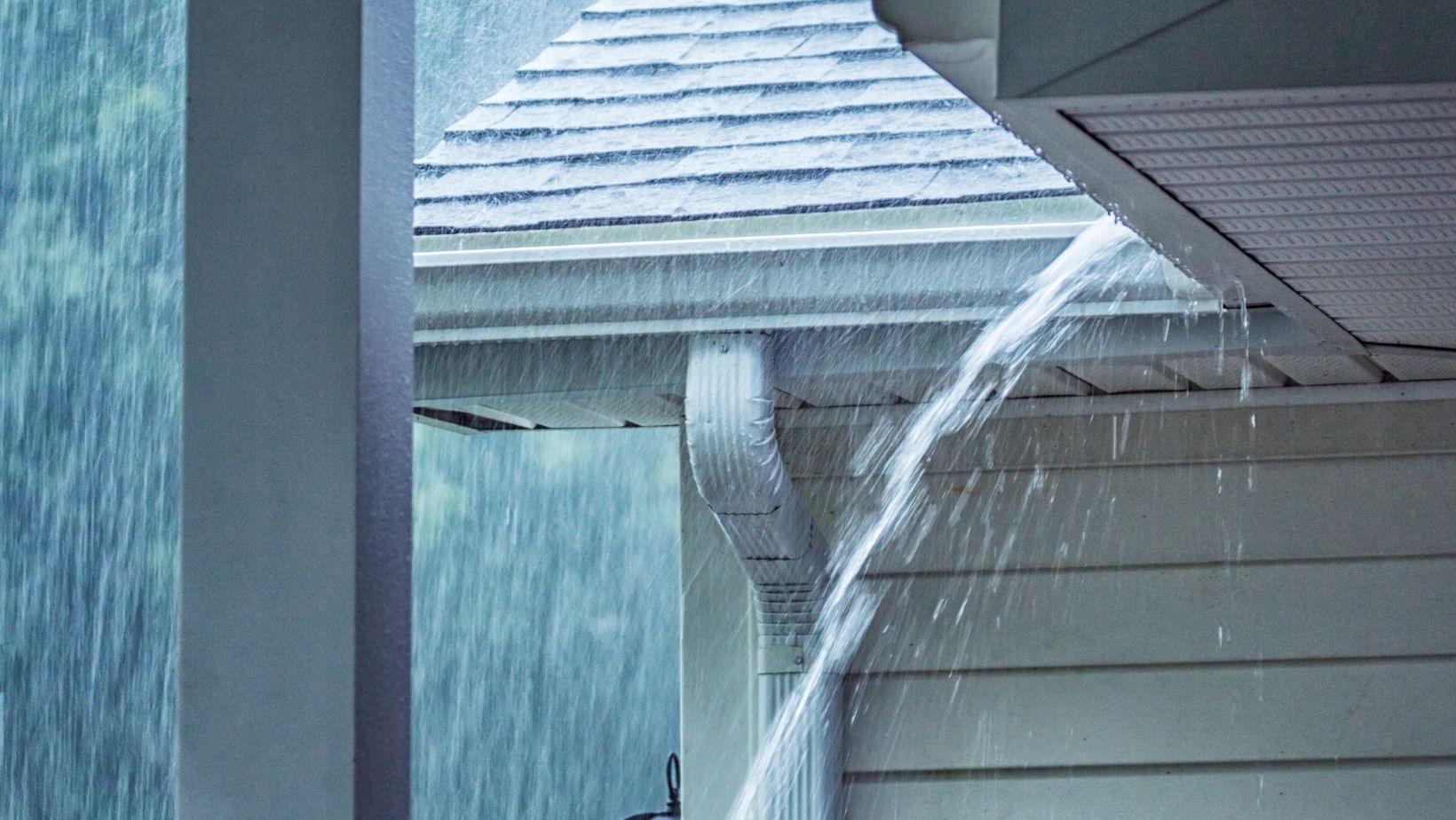
If your gutters are clean and without defects but still overflow during heavy rain, it could be that your gutters need to be wider or require additional downspouts.
Leaks and Drips Become More Noticeable
Heavy rainfall also makes small leaks easier to detect. Tiny cracks or holes in gutters may go unnoticed during light rain, but during a heavy downpour they can release a steady stream of water. These openings often occur at seams, joints, or areas where gutters have begun to rust. While a small drip might seem harmless, ongoing leakage can cause moisture damage to siding, wood trim, and landscaping, so identifying these leaks can help homeowners pinpoint areas that need repair before damage spreads.
Downspout Problems Become Obvious
Downspouts are responsible for carrying water from the gutters down to ground level and away from the structure. During heavy rainfall, blocked or poorly positioned downspouts quickly become evident. If water begins pouring over the sides of the gutter near the downspout, this could be an indication that it’s clogged.
Alternatively, if water drains correctly but pools near the home’s foundation, the downspout may not be directing water far enough away. Both of these issues can increase the risk of basement moisture problems and foundation damage.
Heavy Rain Is a Natural Gutter Inspector
Storms can provide an opportunity to observe how your gutter system is performing. Watching how water flows during a heavy rainstorm can reveal sagging sections, overflow points, and drainage issues that you might not otherwise notice. Addressing these problems early through cleaning, repairs, or adjustments helps ensure that your gutters continue to function properly and are prepared to handle future storms.